

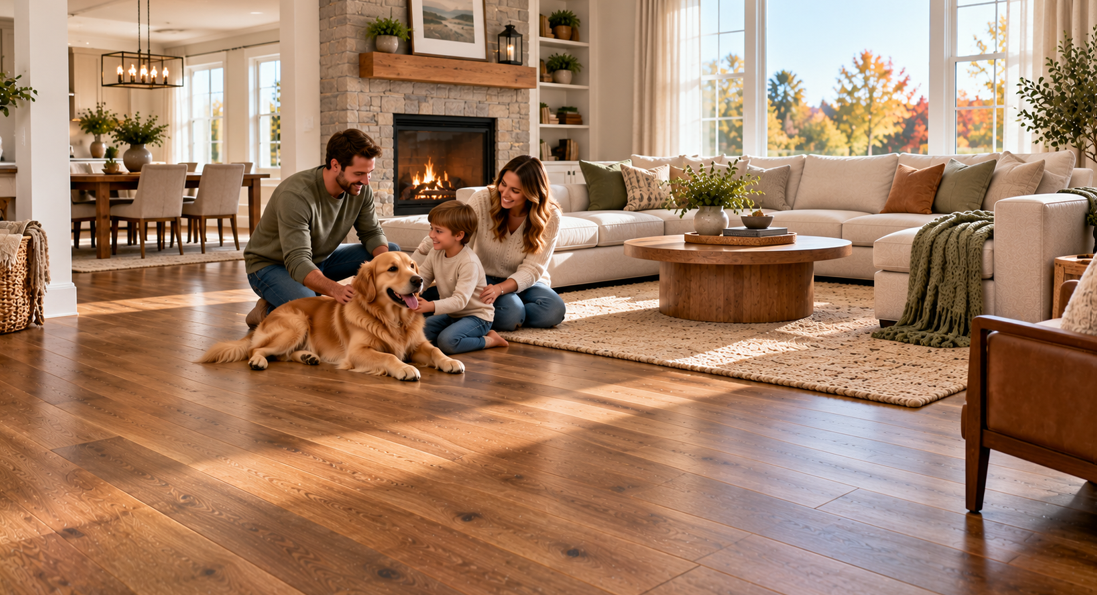
Few floors match the warmth and character of real wood. If you are planning new floors for your Delphos home, you have probably come across two main options: solid hardwood and engineered hardwood. Both are real wood, both can look stunning, and both add lasting value. They are built differently, though, and those differences matter in Northwest Ohio, where homes face cold, dry winters, humid summers and plenty of basements. At Simplified Flooring, our family-owned team helps homeowners choose the right floor for each room, and this guide breaks down how the two compare.
What Is Solid Hardwood?
Solid hardwood is exactly what it sounds like: each plank is milled from a single piece of wood, usually about three-quarters of an inch thick. Oak, maple, hickory and walnut are common species.
Because it is wood all the way through, solid hardwood can be sanded and refinished many times over its life. A well-cared-for solid floor can last for generations, and many older homes in the area still have original hardwood that has been refinished more than once.
What Is Engineered Hardwood?
Engineered hardwood has a top layer of real hardwood bonded to a core made of plywood or another stable material. The layers are set in a cross-grain pattern, which helps the plank resist movement.
From above, engineered hardwood looks like solid wood because the surface is real wood. The difference is in what is underneath and how the plank reacts to moisture and temperature changes.
How Ohio's Climate Affects Wood Floors
Wood naturally expands when humidity rises and contracts when the air dries out. In Delphos, those swings are significant. Summers are warm and humid, while winters bring months of furnace heat and very dry indoor air.
With solid hardwood, these changes can lead to:
Small gaps between boards in winter
Cupping or swelling in humid months
Squeaks as boards shift over time
Engineered hardwood's layered core is more dimensionally stable, so it moves less through the seasons. That stability is one of its biggest advantages in our region.
Whichever you choose, running a humidifier in winter and keeping indoor humidity steady helps protect your floors.
Where Each Type Works Best
Main Living Areas
Both solid and engineered hardwood work well in living rooms, dining rooms and bedrooms on the main and upper floors. Solid hardwood is a classic choice in these spaces, especially in older homes with traditional character.
Basements
Basements are common in Delphos homes, and they tend to be cooler and damper than the rest of the house. Solid hardwood is generally not recommended below grade. Engineered hardwood is often approved for basements because of its stability, though moisture testing and the right installation method remain important.
Over Concrete or Radiant Heat
Engineered hardwood can often be glued down or floated over concrete slabs and is frequently compatible with radiant heating systems. Solid hardwood is usually nailed to a wood subfloor, which limits where it can go.
Kitchens and Entryways
Neither type is waterproof, so spills need quick cleanup. Engineered hardwood handles humidity changes better, which can make it a smart fit for kitchens. In entryways, good mats help catch the snow, salt and farm mud that come in during Ohio winters.
Comparing Durability and Refinishing
Durability depends largely on the wood species and the finish. Harder species such as hickory and maple resist dents better than softer woods.
Refinishing is where the two types differ most. Solid hardwood can be sanded down many times. Engineered hardwood can be refinished too, but the number of times depends on the thickness of its top layer. A thicker wear layer allows one or more refinishes, while a thin one may allow only a light screen and recoat.
For many households, a durable factory finish means refinishing is years away regardless of which type you choose.
Comparing Cost and Installation
Prices vary widely based on species, plank width, finish and wear layer thickness, so it is best to compare specific products. In general:
Solid hardwood installation often takes more time, since it is nailed down and may need on-site finishing
Engineered hardwood offers more installation methods, including floating and glue-down options
Prefinished products of either type reduce installation time and mess
Our team can give you a clear estimate based on your rooms and the products you like. Browse our hardwood flooring selection to see the species, colors and widths available.
Style Options
Both types come in a wide range of looks. Wide planks, light natural oak, warm honey tones and rich browns are all popular. Engineered hardwood is often available in wider planks, since its stable core resists the movement that can affect very wide solid boards.
Wire-brushed and hand-scraped textures help hide everyday wear from kids, pets and busy schedules, and matte finishes give a natural, modern look.
Which Is Right for Your Delphos Home?
Here is a quick way to decide:
Choose solid hardwood if you want the classic choice for above-grade rooms, plan to stay for decades and value the ability to refinish many times.
Choose engineered hardwood if you want flooring for a basement or concrete slab, prefer extra stability through humid summers and dry winters, or want wide planks.
The right answer depends on your home, your rooms and your plans. Owner Ken Waldroup started as an installer, and our team brings that hands-on knowledge to every recommendation.
Find Your Perfect Hardwood Floor
Solid and engineered hardwood both bring natural beauty and lasting value to Delphos homes. Understanding how each one handles Ohio's seasons, basements and daily life helps you choose with confidence.
Visit our Lima showroom at 973 Industry Ave to see hardwood samples in person, order free samples or book an in-home estimate. Questions about your project? Contact our team or call (419) 484-3388, and we will help you find a floor you will love for years.


