

Why Area Rugs Work So Well Over Hard Flooring
Hard flooring gives a room a clean, durable foundation, but sometimes a space needs a little more softness, warmth, or definition. That is where an area rug can make a noticeable difference.
For homeowners in Wapakoneta, Ohio, layering a rug over hardwood, laminate, luxury vinyl, tile, or another hard surface can help a room feel more comfortable without covering the flooring that gives the space its character. A rug can soften footsteps, add color or pattern, and visually organize furniture in an open room.
It is also one of the easier ways to update the look of a space as seasons or decorating preferences change.
At Simplified Flooring, we believe flooring helps establish the style of a home. Area rugs can complement that foundation rather than compete with it. The key is choosing the right rug size, material, placement, and rug pad for the floor underneath.
That last point matters. A rug that constantly slides, curls at the edges, blocks a door, or covers nearly the entire floor can create more frustration than style. Thoughtful placement helps you enjoy the visual benefits while keeping everyday movement in mind.
Layering also does not mean hiding beautiful hard flooring. In many rooms, leaving a visible border of flooring around the rug actually makes both materials look better. The floor frames the rug, while the rug creates a softer center for furniture and daily activities.
Whether you are styling a living room, bedroom, dining area, hallway, or open floor plan, the best result usually starts by asking three simple questions:
What part of the room do you want to define?
How much of the flooring do you want to keep visible?
How will people move through the space?
Once those answers are clear, choosing the right rug becomes much easier.
Start With the Right Rug Size for the Room
Rug size has more influence on a room than many homeowners expect. A rug that is too small can make furniture look disconnected. One that is too large may cover so much hard flooring that the layered effect disappears.
The goal is to make the rug look intentional.
Living Rooms: Connect the Seating Area
In a living room, the rug usually works best when it visually connects the main seating pieces.
One practical arrangement is to place at least the front legs of the sofa and chairs on the rug. This creates a clear conversation area without requiring the rug to extend underneath every piece of furniture.
For larger rooms, a rug that accommodates most or all furniture legs can create a more generous, anchored look.
Avoid choosing a small rug that sits only under the coffee table with a wide gap between the rug and the surrounding seating. That arrangement can make the center of the room feel separate from everything around it.
Bedrooms: Think About Where Your Feet Land
A bedroom rug can add warmth exactly where it is most appreciated.
Larger rugs can sit beneath the bed and extend along the sides and foot of it. Another option is to use smaller rugs or runners beside the bed if you want to show more of the flooring.
Before choosing a size, measure the bed, nightstands, and available walking space. The goal is to create a comfortable landing area while allowing enough of the hard floor to remain visible.
Dining Rooms: Leave Room for the Chairs
Dining-room rugs require a little extra planning because chairs move regularly.
Choose a rug large enough for chairs to remain comfortably on the rug when they are pulled away from the table. When chair legs repeatedly move on and off the rug edge, the setup may feel awkward and can increase the likelihood of catching an edge.
Also consider how easily the rug material can be maintained. Dining spaces see crumbs, spills, and frequent chair movement, so practicality matters just as much as appearance.
Hallways and Entry Areas: Measure the Traffic Path
Runners can bring warmth and pattern into halls while allowing flooring to remain visible along both sides.
Keep the runner centered where possible and avoid crowding doors, floor vents, or tight transitions between rooms.
In entry areas, choose a size that makes sense for the way people actually enter the home. A beautiful rug will be far more useful when shoes, doors, and daily foot traffic have all been considered.
Let the Hard Floor Influence the Rug You Choose
Layering works best when the rug and flooring have a visual relationship. They do not need to match, but they should look as if they belong in the same room.
Start by looking closely at the hard flooring already in place.
Light Wood and Wood-Look Flooring
Light oak, blonde wood tones, and similar wood-look flooring often create a bright, relaxed foundation.
These floors can work beautifully with:
Warm neutrals
Soft blues
Muted greens
Natural textures
Rust and terracotta accents
Black-and-cream patterns
A rug with some contrast will usually stand out more clearly against a pale floor. If both the flooring and rug are extremely light, use texture or pattern to create enough separation.
Medium and Warm Brown Floors
Medium brown floors tend to give a room a warmer visual base.
Rugs with cream, beige, green, navy, muted red, or warm gray can complement these floors without requiring an exact color match.
If the flooring has noticeable grain, consider whether the rug also has a busy pattern. Two highly active surfaces can compete for attention. A quieter rug can give character-rich flooring space to stand out.
Dark Flooring
Dark hardwood, laminate, luxury vinyl, or tile can create a dramatic backdrop.
Lighter rugs often provide useful contrast and can keep a room from feeling visually heavy. Cream, light gray, natural woven tones, or softer patterns may help break up a large area of dark flooring.
That does not mean dark rugs are off limits. A darker rug can work when walls, furniture, or other surfaces bring enough lighter tones into the room.
Tile and Stone-Look Flooring
Tile and stone-inspired flooring can sometimes make a room feel more structured or visually cool. An area rug can soften that effect.
Look for texture when you want additional warmth. Wool-like surfaces, woven looks, and comfortable low-to-medium piles can create contrast against a smooth hard floor.
The rug can also repeat a color found in the tile's variation or veining, helping the two surfaces connect naturally.
Use Area Rugs to Create Zones in Open Spaces
Open floor plans are useful, but they can sometimes make one large area feel undefined. Rugs offer a simple way to establish boundaries without adding walls or permanent dividers.
This is especially useful when a living room flows into a dining area, kitchen, or entry space.
Give Each Area a Clear Purpose
A living-room rug can establish the conversation zone while a second rug defines the dining space. The flooring underneath continues throughout both areas, maintaining visual continuity.
The rugs do not need to match exactly.
Instead, look for one connecting element, such as:
Similar color families
Coordinating border colors
Related patterns
Comparable texture
One repeated accent color
That small connection can keep the overall space cohesive.
Avoid Making Every Rug the Main Attraction
If two or more rugs can be seen at the same time, decide which one should draw the most attention.
For example, use a stronger patterned rug in the living area and a quieter option under the dining table. If both rugs contain bold patterns, the room can become visually busy.
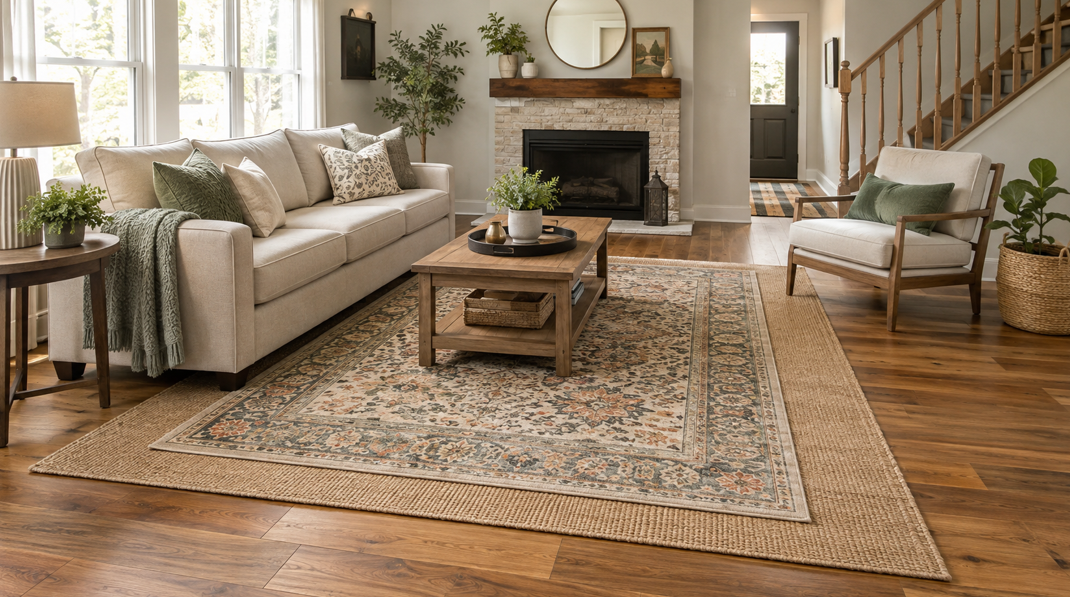
A similar approach works when layering rugs within one room. A larger neutral rug can create a foundation, while a smaller patterned rug adds personality on top.
When exploring different area rugs, consider the entire room rather than evaluating each rug in isolation. Bring flooring colors, furniture upholstery, wall colors, and existing patterns into the decision.
Keep Enough Flooring Visible
One advantage of using rugs over hard flooring is that you can enjoy both materials.
Leaving a border of visible flooring around a rug creates contrast and helps the room feel intentionally layered. If nearly every inch of hard flooring disappears beneath rugs, that visual relationship is lost.
The amount of flooring you expose will depend on room size and furniture arrangement, but maintaining some breathing room usually produces a cleaner result.
Choose Rug Materials With Everyday Life in Mind
Style attracts attention first, but the way a rug performs matters every day.
A formal sitting room may have different needs from a family room where children and pets spend hours on the floor. Before choosing a rug, think about how much traffic the area receives and what kind of maintenance fits your household.
Busy Family Areas
Living rooms, family rooms, and open gathering spaces usually benefit from durable rugs that are manageable to maintain.
Look at manufacturer care instructions and consider how easily the material handles everyday debris, occasional spills, and regular vacuuming.
Pattern can also be practical. A rug with moderate color variation may disguise small bits of everyday debris better than a very light, solid-color surface.
Bedrooms
Bedrooms generally receive less traffic than hallways and family rooms, so comfort can play a larger role.
A softer texture can make the room feel more relaxing and create a comfortable transition from bed to hard flooring.
Dining Areas
A beautiful high-pile rug may look inviting, but it is not necessarily the easiest choice under frequently moved dining chairs.
A lower-profile surface may allow chairs to move more smoothly and can make regular cleanup more manageable.
Homes With Pets
Pet households may want to consider pile height, construction, ease of cleaning, and how the rug responds to claws and frequent activity.
Always check the manufacturer's cleaning guidance rather than assuming every rug can be treated the same way.
Make Rug Safety Part of the Design
A rug can improve comfort and style, but placement deserves careful attention. Rugs that move, bunch, curl, or interfere with walking paths can create unnecessary tripping concerns.
Safety does not have to make the room look clinical. Many of the same decisions that make a rug safer also make it look more polished.
Use an Appropriate Rug Pad
A rug pad can help keep a rug more stable while adding cushioning.
However, not every pad material is appropriate for every floor finish. Some backing materials can potentially interact with certain flooring surfaces or finishes over time.
Check both the flooring manufacturer's guidance and the rug-pad specifications before placing a pad over hardwood, luxury vinyl, laminate, tile, or another surface.
Choose the correct pad size as well. It generally needs to stay hidden beneath the rug rather than extending past the edges.
Watch for Curling Corners
Corners that lift from the floor can catch shoes or feet.
If a rug develops curling edges, address the issue instead of simply stepping around it. Check whether the rug needs a more suitable pad, repositioning, or another solution recommended for that specific rug and flooring combination.
Keep Doorways Clear
Before placing a rug near a door, test the full door swing.
A rug that fits beautifully when the door is closed may be too thick once the door opens across it. Pay attention to exterior doors, closet doors, bathroom doors, and any other location with limited floor clearance.
Keep Main Walking Paths Simple
Avoid placing small loose rugs directly where family members repeatedly change direction or move between rooms unless the rug is properly secured and suited to the location.
Also consider children, older family members, guests, and pets when evaluating the layout. The safest arrangement is one that feels natural to navigate without requiring people to step around unexpected edges.
Layer One Rug Over Another Without Making the Room Feel Busy
Layering a rug over another rug has become a popular styling technique because it offers another way to introduce color, pattern, and texture.
The easiest approach usually starts with a larger, quieter base.
Start With a Neutral Foundation
Choose a larger rug with a relatively simple color or texture, then place a smaller feature rug on top.
This gives the top rug enough contrast to stand out without asking two strong patterns to compete.
Natural-looking woven textures can work especially well as a foundation because they provide visual interest without overwhelming the room.
Use the Top Rug to Add Personality
The smaller rug can introduce:
A stronger pattern
Richer color
Vintage-inspired character
Seasonal tones
A shape that breaks up straight furniture lines
This approach also makes it easier to change the room later. Replacing a smaller accent rug can refresh the look without requiring you to rethink the entire floor arrangement.
Keep Furniture Placement Intentional
Layered rugs look best when their placement relates clearly to the furniture.
An accent rug can sit beneath a coffee table or define the central portion of a seating arrangement. Avoid placing it at an unexplained angle or location unless that positioning clearly supports the room's design.
Also remember that every additional layer increases floor height. Check transitions, chair movement, and walking areas to make sure the setup remains comfortable.
Build a Room That Feels Comfortable From the Floor Up
Layering rugs over hard flooring works because it lets two different materials do what they do best.
Hard flooring creates a durable, stylish foundation. An area rug brings softness, color, texture, and visual definition. Together, they can make a room feel more welcoming without hiding the floor underneath.
For Wapakoneta homeowners, the best approach is to begin with the room rather than the rug itself.
Measure carefully. Think about where furniture sits and how people move through the space. Look at the flooring's undertones before choosing rug colors. Decide whether you want the rug to blend quietly into the design or become a focal point.
Then consider the practical details that make the arrangement enjoyable over time. Select a rug material that suits the amount of traffic in the room, check manufacturer care instructions, and use an appropriate rug pad when recommended for the flooring underneath.
Safety belongs in the design process too. Keep corners flat, make sure doors have enough clearance, and avoid arrangements that create awkward transitions in busy walking areas.
Most importantly, do not feel that an area rug needs to cover the majority of a beautiful hard floor. Leaving some flooring visible often creates the contrast that makes layering so effective in the first place.
If you are choosing a new rug or coordinating one with flooring in your Wapakoneta-area home, reach out to us at Simplified Flooring. Our knowledgeable team can help you compare stylish, practical options that work beautifully with your space and everyday lifestyle.


