

Choosing Carpet That Fits the Way You Use Your Space
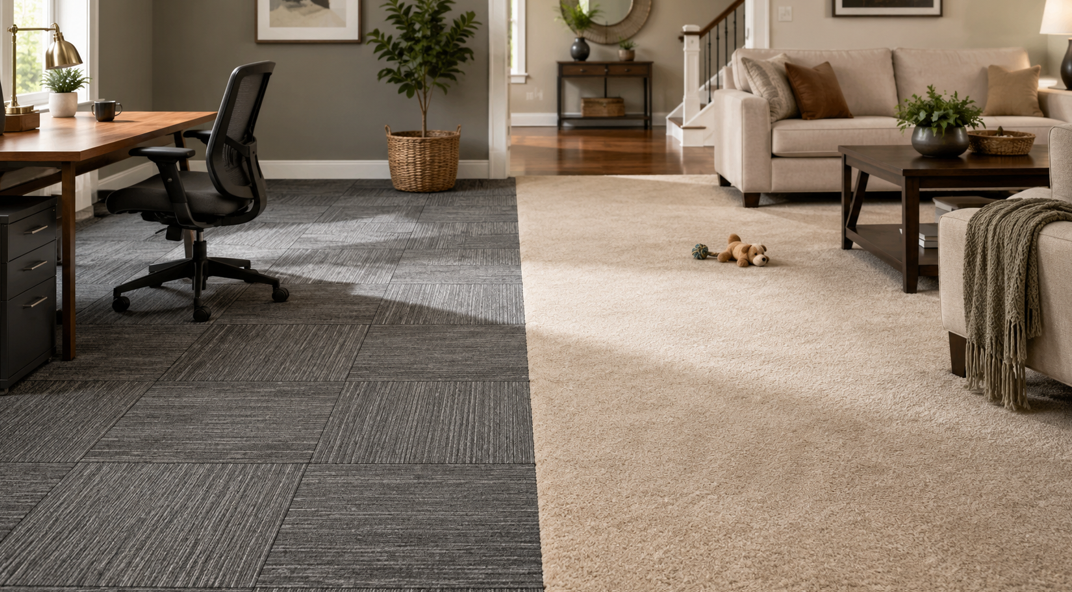
Carpet can make a room feel warmer, quieter, and more comfortable, but not every carpet product performs the same way. Two of the most common options are carpet tile and broadloom carpet, and each offers a different balance of durability, appearance, maintenance, and long-term value.
Broadloom is the traditional rolled carpet commonly installed from wall to wall. Carpet tile comes in separate squares or planks that are fitted together across the floor. Both can work well in Lima homes, offices, basements, playrooms, and other spaces, but the better choice depends on how the room will be used.
A quiet bedroom may benefit from the softness and seamless appearance of broadloom. A busy playroom, home office, or finished basement may be better suited to carpet tile because individual sections can often be replaced if they become damaged.
Durability is not simply about which product lasts the longest. It also involves how well the flooring handles foot traffic, spills, furniture, pets, moisture, stains, and everyday cleaning. Repairability matters too. A floor that can be restored without replacing the entire installation may offer better practical value in an active household.
Lima-area homeowners working with Simplified Flooring can compare carpet options alongside the room’s subfloor, furniture, lighting, and intended use. Seeing and feeling samples in person makes it easier to understand differences in texture, density, backing, and construction.
Before choosing between carpet tile and broadloom, consider where the flooring will be installed, who will use the room, how much traffic it receives, and how you prefer to manage future maintenance.
What Is Carpet Tile?
Carpet tile is a modular flooring product made in individual squares or rectangular planks. The pieces are installed next to one another to form a complete carpeted surface.
Common tile sizes vary by manufacturer and collection. Some products create a traditional uniform appearance, while others are designed to produce visible patterns, color variation, or directional effects.
How Carpet Tile Is Constructed
Carpet tile typically includes a carpet fiber layer attached to a firm backing. The backing helps each tile maintain its shape and remain stable after installation.
Depending on the product, the backing may be designed to support:
Dimensional stability
Resistance to edge curling
Easier removal and replacement
Performance under rolling furniture
Installation over suitable hard subfloors
Added moisture management
Carpet tile usually feels firmer underfoot than thick residential broadloom. However, modern products are available in many textures and pile styles, including options designed for comfortable residential spaces.
Where Carpet Tile Works Well
Carpet tile is often associated with offices and commercial interiors, but it can also be practical in several areas of a home.
It may be a strong option for:
Playrooms
Home offices
Finished basements
Craft rooms
Mudrooms
Entertainment spaces
Home gyms with light activity
Multipurpose rooms
Rental properties
Its modular format is especially useful in spaces where spills, stains, or concentrated wear are more likely.
Why Buyers Consider Carpet Tile
Homeowners and business owners often choose carpet tile because it provides:
Replaceable individual sections
Flexible pattern options
Easy access to parts of the subfloor
Defined work or activity zones
Strong performance in busy areas
Less material waste during certain repairs
Practical installation in rooms with unusual shapes
Carpet tile can also help create a customized design. Different colors or installation directions can be used to form borders, pathways, accent zones, or subtle geometric patterns.
What Is Broadloom Carpet?
Broadloom is carpet manufactured in wide rolls and installed across the room, usually from wall to wall.
It is the type of carpet many homeowners picture when they think of a soft bedroom, living room, hallway, or family room floor.
How Broadloom Is Installed
Broadloom may be installed over carpet cushion, commonly called padding. The cushion affects comfort, sound absorption, insulation, and how the carpet feels when walked on.
The carpet is stretched, secured, trimmed, and joined where necessary. In rooms wider than the carpet roll, seams may be required.
A skilled installation team plans the layout to position seams carefully and keep the pile direction consistent.
Where Broadloom Works Well
Broadloom is often preferred in:
Bedrooms
Living rooms
Family rooms
Hallways
Stairs
Nurseries
Formal sitting rooms
Large connected spaces
It works especially well when comfort, warmth, and a continuous appearance are priorities.
Why Buyers Choose Broadloom
Broadloom carpet is popular because it can provide:
A soft and comfortable surface
A seamless or nearly seamless appearance
Many residential textures and colors
Strong sound absorption
Added warmth underfoot
Compatibility with a separate carpet cushion
A traditional wall-to-wall finish
It is available in a wide selection of fibers, pile heights, patterns, and construction types. This allows homeowners to choose a product that fits both their design preferences and performance needs.
Comparing Everyday Durability
Carpet tile and broadloom can both be durable, but they respond differently to wear and damage.
Performance in High-Traffic Areas
Carpet tile is commonly designed for spaces that receive steady foot traffic. Its lower, denser pile and stable backing can help it maintain its appearance in home offices, corridors, playrooms, and multipurpose areas.
Broadloom durability varies widely. A dense, well-constructed broadloom carpet may perform very well in busy residential spaces. A softer carpet with a high or loose pile may show crushing, shading, or traffic patterns sooner.
When comparing products, look beyond whether the flooring is sold as tile or broadloom. Consider:
Fiber type
Pile density
Twist level
Backing
Stain protection
Product rating
Recommended application
Manufacturer care guidance
A high-quality broadloom product may outperform an entry-level carpet tile, and a commercial-grade carpet tile may be more durable than a soft residential broadloom.
Furniture and Concentrated Pressure
Heavy desks, bookcases, sofas, and tables can leave impressions in carpet fibers.
Carpet tile’s firmer construction may make it suitable for rooms containing office chairs, shelving, or frequently moved furniture. Products intended for commercial or workspace use are often designed with concentrated traffic in mind.
Broadloom with soft padding may show deeper furniture indentations. Some impressions improve after furniture is moved, while others may remain visible depending on the fiber and construction.
Furniture cups, glides, and careful placement can help distribute weight across either flooring type.
Rolling Chairs
A rolling office chair creates repeated pressure in a small area. This can wear carpet fibers and affect seams or edges if the flooring is not designed for that use.
In a home office, select a carpet tile or broadloom product rated for rolling traffic. A suitable chair mat may also help protect the surface.
Do not assume that every carpet tile automatically supports rolling chairs. The backing, installation method, and product rating still matter.
Repairability and Replacement
Repairability is one of the clearest differences between carpet tile and broadloom.
Replacing Damaged Carpet Tile
If a carpet tile becomes permanently stained, torn, or damaged, the affected piece can often be removed and replaced without disturbing the entire floor.
This can be valuable in rooms where children, pets, crafts, food, or frequent activity increase the risk of localized damage.
Replacement works best when spare tiles from the original installation have been stored properly. A newly installed tile may initially look slightly different from the surrounding floor because the older pieces have experienced traffic, cleaning, and exposure to light.
Even with that temporary difference, replacing one tile is often more manageable than replacing an entire carpeted room.
Repairing Broadloom
Broadloom can sometimes be patched, but repairs require a closely matching piece and careful work to align the pile and pattern.
A patch may be less noticeable in textured or patterned carpet than in a smooth, solid-color product. However, it can still be visible depending on the damage location, lighting, and age of the surrounding carpet.
If the damage is widespread, replacement may involve the entire room or a large connected section.
Planning for Future Repairs
When selecting carpet tile, consider purchasing extra material from the same production run. Store it flat in a dry, protected area.
For broadloom, keeping a clean remnant may provide material for a future patch. Remnants can also be useful for testing cleaning products before applying them to the installed carpet.
Stains, Spills, and Cleaning
The way a carpet handles spills depends on its fiber, treatment, color, texture, and construction.
Cleaning Carpet Tile
Carpet tile can be practical when spills affect a small area. The tile can be cleaned in place, and some products may be removable for more focused treatment when the installation system allows it.
If a stain cannot be removed, replacing the affected section may restore the floor without a full-room project.
However, liquid can reach the joints between tiles. Prompt cleaning is still important, particularly when the floor is installed in a basement, craft room, or food-related area.
Cleaning Broadloom
Broadloom provides a continuous surface with fewer visible joints. Regular vacuuming and prompt spot treatment help preserve its appearance.
Spills may spread through the carpet fibers and into the cushion below if they are not addressed quickly. The cleaning method should follow the manufacturer’s recommendations to protect the fiber and backing.
Professional cleaning may be recommended periodically, depending on the carpet type and household conditions.
How Color and Pattern Affect Appearance
Medium tones, flecked colors, and subtle patterns can help disguise everyday soil and minor marks.
Very light carpet may show stains more readily, while very dark carpet can reveal lint, dust, and light-colored pet hair.
Carpet tile patterns can visually break up traffic areas and minor variation. Broadloom with texture or multicolored fibers can offer a similar benefit.
Comfort and Softness Underfoot
Broadloom generally offers more options for a plush, cushioned feel.
Broadloom Comfort
A separate carpet cushion can make broadloom feel soft and supportive. This is particularly appealing in bedrooms, nurseries, living rooms, and spaces where people sit or play on the floor.
Cushion can also improve sound absorption and help the carpet feel warmer during cold Ohio winters.
The thickest cushion is not always the best choice. The carpet manufacturer may specify a suitable thickness and density to support performance.
Carpet Tile Comfort
Carpet tile tends to feel firmer because of its structured backing. Some products include attached cushion or are designed to provide greater residential comfort.
Its firmer feel may be an advantage in rooms where chairs, worktables, storage units, or wheeled furniture need a stable surface.
For a playroom or basement, buyers may prefer a product that balances softness with easy maintenance rather than choosing the plushest available option.
Appearance and Design Flexibility
Both formats offer many attractive choices, but they create different visual effects.
The Continuous Look of Broadloom
Broadloom creates a smooth, unified floor. This can make a bedroom, living room, or large family space feel calm and comfortable.
Solid colors and subtle textures support a wide range of furniture and decorating styles. Patterned broadloom can also add detail without introducing visible modular lines.
When seams are required, their visibility depends on the carpet style, room lighting, installation layout, and pile direction.
The Modular Look of Carpet Tile
Carpet tile can be installed to create either a uniform or deliberately patterned appearance.
Possible layouts include:
Monolithic installation, with every tile facing the same direction
Quarter-turn installation, with neighboring tiles rotated
Ashlar installation, using staggered rectangular planks
Random installation, when the product is designed for varied placement
Checkerboard or contrasting color layouts
Borders and activity zones
Some carpet tiles are designed so the joints blend into the overall surface. Others intentionally highlight the modular format.
A coordinated carpet tile flooring design can define different functions in a home office, playroom, or multipurpose basement without building physical barriers.
Pattern Scale and Room Size
Large patterns can make a strong statement but may feel busy in a compact room. Smaller patterns or low-contrast variation often create a quieter effect.
Before ordering, look at several tiles together. One sample may not show how the full pattern repeats across the room.
For broadloom, review a large sample whenever possible. A pattern that appears subtle on a small swatch may become more prominent across a full floor.
Moisture and Basement Considerations
Finished basements are common locations for carpet tile because modular flooring can offer practical advantages. However, neither carpet tile nor broadloom solves an existing moisture problem.
Evaluate the Basement First
Before installing carpet, check for:
Active leaks
Dampness
Water staining
Condensation
Foundation cracks
Plumbing concerns
Musty odors
Previous flooding
Any underlying moisture issue needs to be addressed before new flooring is installed.
Why Carpet Tile May Be Practical
If a small section of carpet tile is affected by a localized event, individual pieces may be easier to lift, inspect, dry, or replace.
Some backing systems are designed with moisture-related conditions in mind, but product specifications vary. Buyers should confirm that the selected tile is approved for the intended basement application.
Broadloom in a Basement
Broadloom can create a warmer, softer finished basement, particularly in a family room or guest area. The subfloor condition, cushion, installation method, and moisture history need careful consideration.
If broadloom and padding become saturated, drying and restoration may be more involved because the floor is installed as one continuous system.
The better option depends on the basement’s condition and use, not simply whether one format is described as more moisture resistant.
Pet-Friendly Performance
Pets introduce claws, hair, tracked-in soil, spills, and occasional accidents.
Carpet Tile for Pet Households
Carpet tile can be appealing because damaged or permanently stained sections may be replaced individually.
A dense, low-profile surface may also be less inviting for pets that scratch or pull at loose fibers.
Tile joints still require attention during cleanup. Prompt treatment helps prevent liquid from reaching the backing or subfloor.
Broadloom for Pet Households
Broadloom provides a comfortable surface for pets to walk, rest, and play on. Dense, low-pile styles may be easier to vacuum and maintain than very soft, loose, or looped textures.
Pet claws can catch certain loop constructions, so households with active cats or dogs may prefer a cut-pile carpet or another product recommended for pets.
For either format, consider stain resistance, odor management, fiber type, and ease of vacuuming.
Sound Control and Room Acoustics
Carpet helps reduce reflected sound, footsteps, and noise movement.
Broadloom and Cushion
Broadloom installed over quality cushion can provide strong sound absorption. It may help soften noise in bedrooms, upstairs rooms, media spaces, and busy family areas.
The continuous installation also limits the hard joints found in modular flooring systems.
Carpet Tile and Sound
Carpet tile reduces sound compared with hard flooring, though performance varies by backing and construction.
Products with cushioned backing may improve acoustic comfort in home offices, playrooms, and basement entertainment areas.
For buyers who work from home, carpet tile can help reduce chair movement and footstep noise while still offering a structured surface.
Installation and Material Waste
Room shape and project size can affect how much material is needed.
Carpet Tile Installation Considerations
Carpet tiles can be practical in rooms with alcoves, closets, columns, or unusual angles because individual pieces can be cut to fit.
Some layouts may create less waste than cutting broadloom from a large roll. Damaged pieces can also be replaced without removing the surrounding installation.
Accurate measurements and careful layout planning remain important. Starting lines, pattern direction, perimeter cuts, and adhesive requirements influence the finished result.
Broadloom Installation Considerations
Broadloom is efficient in many rectangular rooms, but roll width and seam placement affect the layout.
A large room may require multiple pieces. Patterned broadloom may require additional material so the design can be matched correctly at seams.
Professional stretching and attachment help prevent wrinkles, ripples, and movement.
Transition Areas
Consider how the carpet will meet nearby flooring.
Transitions may occur at:
Doorways
Hallways
Stairs
Tile floors
Luxury vinyl
Hardwood
Laminate
Entry areas
The height of the carpet, backing, and cushion can affect the transition profile. Planning these details early creates a cleaner finished appearance.
Long-Term Value and Lifecycle Costs
The initial material price is only one part of the flooring’s value.
Carpet Tile Lifecycle Value
Carpet tile may provide strong lifecycle value in rooms where damage is likely to occur in isolated sections.
Instead of replacing the full floor, the homeowner may be able to replace only worn or stained tiles. This can reduce material use and disruption.
However, storing spare tiles and selecting a suitable installation system are important parts of this advantage.
Broadloom Lifecycle Value
Broadloom can deliver excellent value when installed in an appropriate room and maintained correctly.
A durable fiber, dense construction, suitable cushion, and professional installation can support years of comfortable use.
If the entire carpet wears evenly, broadloom’s continuous design may offer good value. Its repair options are simply less modular than carpet tile.
Questions Beyond the Purchase Price
When comparing products, ask:
How long is the product expected to perform in this room?
Can a damaged area be repaired?
Will replacement material be available?
What cleaning does the product require?
Is professional cleaning recommended?
Does the product suit pets or rolling furniture?
How will the floor handle the room’s traffic?
Is a separate cushion required?
What preparation does the subfloor need?
Does the design have enough flexibility for future décor changes?
A slightly higher initial investment may provide better value when the product is properly matched to the space.
Which Option Works Best in Different Rooms?
The best flooring choice can vary from one room to another.
Bedrooms
Broadloom is often preferred because it provides warmth, softness, and a continuous appearance.
Choose carpet tile when the room also functions as an office, studio, or other high-use space where repairability matters.
Living and Family Rooms
Broadloom creates a comfortable, unified surface for relaxing and entertaining.
Carpet tile may work well in a casual family area where children, pets, food, or activities increase the chance of spills.
Home Offices
Carpet tile can be practical because of its firm backing, modular replacement, and suitability for defined layouts.
Broadloom may be preferred when the office is part of a bedroom or when comfort and sound absorption matter more than replaceability.
Playrooms
Carpet tile is a strong option for many playrooms because individual sections can be replaced after permanent stains or damage.
Broadloom offers greater softness for floor play, especially when paired with suitable cushion.
Finished Basements
Carpet tile may provide easier access to localized areas and simpler replacement after minor damage.
Broadloom can create a warm family-room atmosphere when the basement is consistently dry and properly prepared.
Hallways and Stairs
Broadloom is commonly used in halls and on stairs, but it requires a product constructed for concentrated traffic.
Carpet tile may suit some hallways, although stairs usually require a product and installation method specifically approved for that application.
Commercial and Mixed-Use Rooms
Carpet tile often performs well in small offices, reception areas, meeting rooms, and other spaces where traffic patterns develop.
Broadloom may be selected when a softer, more residential appearance supports the room’s atmosphere.
Questions to Ask Before Choosing
Before making your decision, consider these questions:
How much foot traffic does the room receive?
Are spills or stains likely?
Will pets use the space?
Does the room contain rolling chairs?
Is softness or firmness more important?
Could one section wear faster than the rest?
Is the space below grade?
Has the room had moisture issues?
Do you prefer a continuous or modular appearance?
Would you like to create patterns or activity zones?
Are you willing to store replacement material?
How important is sound control?
Will heavy furniture remain in one position?
What level of cleaning and maintenance fits your routine?
How does the carpet meet adjoining floors?
Your answers can help narrow the product selection before you begin comparing colors and textures.
Making the Right Choice for Your Lima Property
Carpet tile and broadloom can both provide durable, attractive flooring when they are installed in the right setting.
Carpet tile stands out for modular replacement, design flexibility, and practical performance in busy or multipurpose areas. It may be particularly useful in home offices, playrooms, basements, craft spaces, and rooms where isolated damage is more likely.
Broadloom stands out for softness, warmth, sound absorption, and a continuous residential appearance. It remains a strong choice for bedrooms, living rooms, family rooms, and other spaces where comfort is the main priority.
Choose carpet tile when repairability, defined zones, and concentrated traffic matter most. Choose broadloom when you want a plush surface and a smooth wall-to-wall finish.
The final decision should also account for fiber, density, backing, cushion, stain resistance, subfloor conditions, and installation quality. Comparing complete product specifications is more useful than choosing based on format alone.
Ready to compare carpet styles for your Lima home or business? Get in touch with Simplified Flooring for personalized help selecting a comfortable, durable floor that fits the way you use your space.


